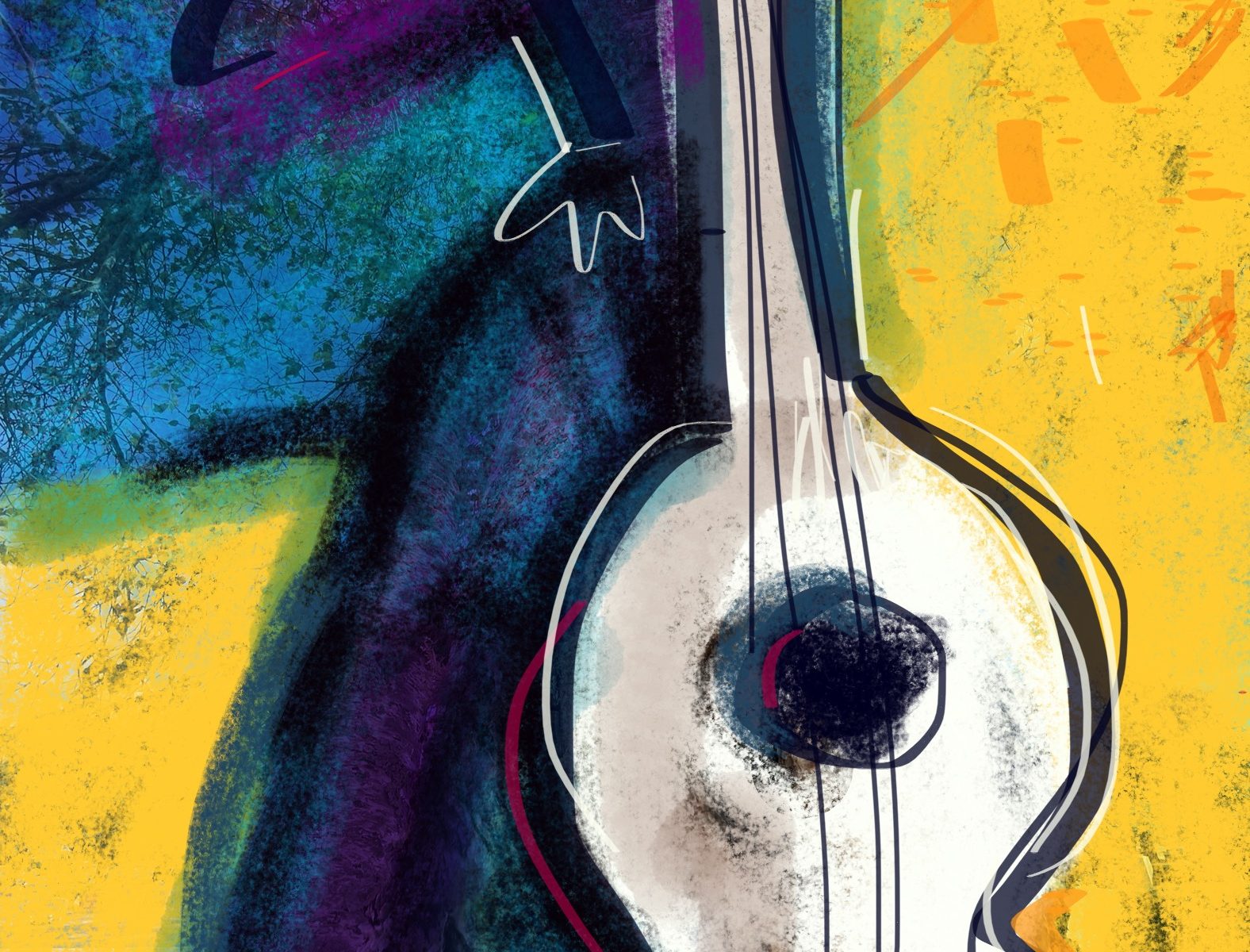
Composing your web marketing like a symphony– or depending on your style– maybe a kick-ass rock opera.
While I’m back working in the realm of digital marketing for a bit (a girl’s gotta eat, as they say), I thought I’d share one of the approaches I’ve taken over the years that has worked consistently and got me recruited on amazing projects time and time again.
To be clear: I’m NOT talking about championing the best digital stats1 that beat everyone else in your marketing department– although I’ve done that too, growing a targeted, real human opted-in, regional email list from 70K t0 150K while keeping audience clicking at 50-60% rates, sharing content, and showing up in person and once spending $250K in twenty minutes on the digital properties I managed.
I’m talking about winning by way of playing good music across a digital realm that makes people feel like dancing your way.
The old marketing language is around building a community that naturally shows up when you need them to. A community includes internal stakeholders, vendors, leaders, staff, contractors, and customers. The other old language is also around “optimizing” and “maximizing.” These both imply factory-style function separation of parts, and assumes that accelerated growth is inherently “good” (I beg to differ).
But if you ‘have’ or ‘host’ a community, you also know they show up, not because you did something special, or you are so wonderful, but because they feel moved to.
So, this musical composition metaphor helps you focus on the movement part of digital marketing. How the notes you drop land across platforms – at what time – can make a great piece of music, or a Steely Cold2 clinical, hook-laden, funnel-feeling3 click fest.
Movement happens naturally when you hear good music. Good music happens when each instrument is played with creativity, craft, and love of the thing. IE, Soul.
So the first thing to do is understand what your digital instruments are.
In the past I’ve called each part that makes up your digital marketing, digital platforms, but instruments may be a better word. And most businesses utilize several, but they tend to work in inharmonious ways. That’s because each is made by founders and run in part-competition, part-concert with one another. Every tech bro wants their band to pay the Superbowl, if you know what I mean.
That’s why no matter how optimized each is, they don’t always make the music you wish. That’s takes someone who feels the beat and works across the sphere for the good of the piece.
If you can have your digital instruments work collaboratively together, with rhythm and purpose, and you make Internet music with undertones that carry. This is deeply satisfying. And the people who come out, deeply engaged. In person. (Anyone can get great ‘click rates’ because basement trolls click like crazy, but who drives their arse across the state to see you in person, well, that’s meaningful.)
Here’s a little true music breakout this Sunday morning for you. To understand collaborative content making, you need to know it requires much more than just tagging someone on your post, featuring their face in your feed, or asking them to share to their audience, it’s literally calling to others across the sphere and listening for the response.
Breaking down your digital marketing “band”
Facebook is an instrument that feels a touch sticky, staccato, old and occasionally odd. Like an out-of-tune baby grand. There is little beauty in Facebook all by itself, but many people still find the beat of their social lives here, just because of sheer numbers of people who understand it as an instrument of nearby events and old classmates. And it’s a classic. Piano has traversed classical, jazz and modern rock and been avant-garded by folks like Bartok along the way. Best to not underestimate it’s power.
Facebook is what Grandma tells you to do.
Instagram still seems to set a more melodic tone, and was meant to serve up aesthetic beauty sharing lens moments of your life with friends and family. Later it became a home for cultural news and movements that can propel guests toward your aesthetic overtones. Instagram is more curated, prettier, and trying its darndest right now to stay beautiful. For now, I’ll call it a lead singer. Here’s hoping it keeps its soul.
Websites function like a steady drumbeat and great bass together, while practically serving as a reference for all “find it yourself” information. At least if you make it correctly.
Websites need to be “heard” from far away, especially if a person hears from another person about your thing, but needs to do some research first before investing their own cash, dance, or time.
A website with good SEO means potential audience can 1) get all the info they need to connect or get regularly reminded what you need (like phone, address, social media links and key brand information) and 2) you’ll be easy to find no matter where you are in the world, so the song ‘carries’ and can be found without much work.
Timing is everything
Making music across the realm of the Internet means setting a project timeline where the music begins and ends, and whipping up a singular symphony for a given goal. And with each platform serving as it’s own instrument, responding to each other and the audience slowly opens new listeners up to a larger song. Or maybe even, a concert4.
This requires choreographing when and how each platform speaks to each other. Ever listen to call and response music via Gospel? Yeah, play that video above and learn something.
Another Sunday Morning illustrative musical interlude below. I’m sure you can make the connections:
To do digital marketing effectively it requires seeing each digital platforms as part of a larger composition, not siloed platforms that speak only to a special sliver of audience.
Your job is to make music with it. Digital denizens, are in fact, paying attention.
How you do this is by making one conversational beat on one platform, then dropping a note on another, then working the various components together for a singular “song.”
Example:
I was recently hired to “re-launch” a new brand that very few people know exist, despite the owners having a logo, a website, a Facebook account all branded properly. Why? because a logo and photos alone don’t move people. There’s nothing to talk about, no cross-platform connections, no call and response in the instrumentation, so to speak.
Movement takes music. And making music on the web requires rhythm.
Here’s what I mean:
Many folks who handle digital marketing manage one platform with great specificity and are tasked for nailing highest “optimization.” This may mean that a large company has a Facebook channel managed by one person, TikTok handled by another, and a website and email managed completely separately. And each measured by statistical conversions, impressions, or other self-contained measurement. Meaning, if you post on Instagram, you get encouraged to use their unique tools to maximize reach and engagement there. Being “good” at your job means you have likes, comments, shares and conversions.
But even the finest “optimization” has little to do with people actually showing up and moving their time, money and effort in your direction.
While these platforms may all be overseen by a singular digital marketing director– parsing out messaging that needs to happen and giving creative guidelines– each creator or mini-manager is also working with a competitive spirit of sorts too: keeping their job by nailing statistics
FOOTNOTES & SUB-SUBTEXT
- Read this piece of why stories are better than stats, and honestly music may be a better approach than stories even. And if you are like Bob Dylan, then stories and music are one in the same. ↩︎
- I’m not going to knock Steely music, especially Steel drums and guitar, because much of it has charms and real roots. I’m doing this call out as an appeal to my husband’s humor because he hates Steely Dan. ↩︎
- I am not a fan of feeling like some brand is pushing me into a funnel, and refuse to do this with the public. ↩︎
- I have worked on a number of music festivals, too many to count, with consistent strong showings and good numbers for the producers. ↩︎